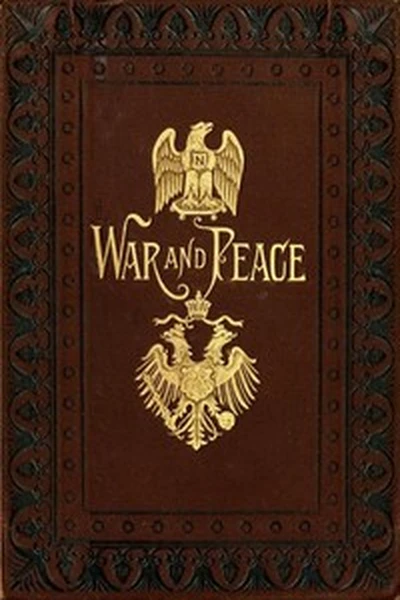
War and Peace Summary
The Illusion of Control Amidst the Machinery of History
by Leo Tolstoy (Aylmer Maude, Translator)
13 min read18 min audioAI summary + audio
You'll learn
- 1High society is a rigid theater where authenticity is a liability and human essence is sacrificed for a perfect performance.
- 2The romanticized glory of war is a lie; it is actually a churning river of flesh and mud driven by petty appetites and bureaucratic boredom.
- 3True awakening only occurs when the illusions of social status and earthly power are stripped away by the proximity of death.
- 4History is not a chess match steered by the genius of Great Men, but a blind mechanical process governed by collective psychology and the intersection of egos.
- 5Authentic life is found only when you stop performing and dare to be vulnerable.
- 6Internal freedom is an impenetrable fortress that no physical prison can contain.
- 7True growth is the quiet absorption of the self into the service of others.
About this summary
What if the 'Great Men' of history are actually just passengers in a blind, mechanical process they can't control?
The scent of expensive perfume and the rhythmic rustle of silk dresses fill Anna Pávlovna's St. Petersburg salon.
advancedRussian LiteraturePhilosophical FictionHistorical EpicExistentialismSocietal Critique
What's inside
A chapter-by-chapter breakdown of the key ideas — read the full summary or listen to the narration.
- 1PART 1 — CHAPTERS 1–28 — The introduction of the St. Petersburg salons and the social dynamics of the Russian elite.
- 2PART 2 — CHAPTERS 29–51 — The transition from the polished salons to the cold terror of the Napoleonic wars.
- 3PART 3 — CHAPTERS 52–72 — The domestic struggles of Princess Mary and the romantic illusions of Nicholas Rostov.
- 4PART 4 — CHAPTERS 73–104 — The predatory nature of social gambling and Pierre's search for meaning in Freemasonry.
- 5PART 5 — CHAPTERS 105–139 — The tension between the polished rituals of high society and the raw vitality of genuine emotion.
- 6PART 6 — CHAPTERS 140–170 — The emotional wreckage of betrayal and the shift toward the machinery of war.
- 7PART 7 — CHAPTERS 171–197 — The disconnect between imperial strategy and the raw, ugly reality of the front lines.
- 8PART 8 — CHAPTERS 198–226 — The collapse of authority from the domestic tyrant to the failing empire of Napoleon.
- 9PART 9 — CHAPTERS 227–258 — The visceral horror of war and the discovery of unconditional love in the face of death.
- 10PART 10 — CHAPTERS 259–292 — The spiritual reconciliation of Natasha and Andrew amidst the ruins of Moscow.
- 11PART 11 — CHAPTERS 293–333 — The French retreat and the realization that history is a blind, mechanical process.
- 12PART 12 — CHAPTERS 334–365 — The aftermath of war and the transition into a quiet, domestic existence.
What you'll walk away with
- “What if the parts of you that feel like malfunctions in a professional setting are actually your only authentic assets?”
- “Notice how often you are performing a role for others and consider the cost of maintaining that mask.”
Ratings & reviews
Top reviews
No ratings yet. Be the first to review.
You might also like
Literature & Classics
More Literature & Classics books





Trending
Popular right now





ReadOrion summaries and audio are AI-generated — condensed interpretations of the key ideas, not substitutes for the original works.
All rights to source books belong to their authors and publishers.