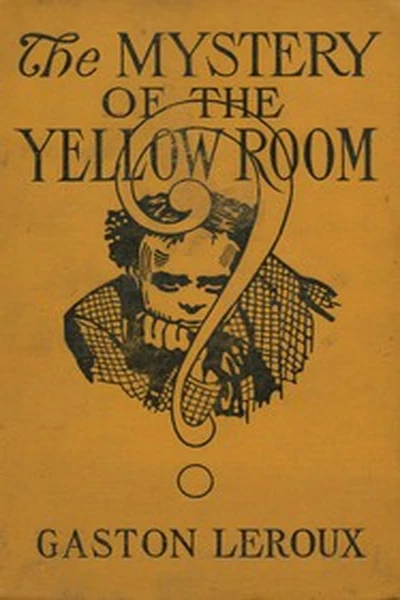
You'll learn
- 1The most impenetrable locks are not made of iron but of false assumptions that blind the observer.
- 2When a crime seems physically impossible, it is usually because the investigator is applying the wrong set of rules to the environment.
- 3Institutional logic often fails because it seeks a plausible narrative to satisfy the public rather than the empirical truth.
- 4The most dangerous intruder is rarely a phantom from the outside but the trusted individual already inside the circle of confidence.
- 5True intelligence is not the absence of error but the courage to analyze and admit one's own intellectual blind spots.
- 6The most enduring prisons are not constructed from stone and mortar but from shame, silence, and lifelong secrets.
About this summary
What if the reason you can't solve the puzzle is that you're trusting your senses over your logic?
You stand before a locked door and listen to a father sob with a rage that sounds like helplessness. You can hear the muffled screams of a daughter inside, but every exit is sealed.
intermediatelocked-room mysterypsychological thrillerdeductive reasoningclassic detectivecognitive bias
What's inside
A chapter-by-chapter breakdown of the key ideas — read the full summary or listen to the narration.
- 1The Locked Room — A brutal attack occurs in a room sealed from the inside.
- 2The Prodigy — Joseph Rouletabille is introduced as a brilliant but marginalized detective.
- 3The Judge and the Game — A magistrate treats the investigation as a theatrical performance.
- 4The House of Isolation — The secluded lives of Professor Stangerson and his daughter are revealed.
- 5The Psychological Siege — Rouletabille uses specific knowledge to break the composure of Robert Darzac.
- 6The Architecture of Secrets — The investigation shifts from physical geometry to the psychology of the criminal.
- 7The Victim's Testimony — Mademoiselle Stangerson recounts the terror leading up to the attack.
- 8The Mask of the Fiancé — Rouletabille dismantles the image of the gentle Robert Darzac.
- 9The Village of Grudges — The investigation moves to the hostile environment of the Donjon Inn.
- 10The Logical Puzzle — The mystery of the vanished killer is linked to a theft of scientific papers.
- 11The Duel of Experts — Rouletabille challenges the narrative of the celebrated detective Larsan.
- 12The Mirror Image — The possibility of a double is introduced to explain contradictory sightings.
- 13The Human Monster — The search for a magic trick evolves into a hunt for a predator.
- 14The Mathematical Dead End — Rouletabille designs a physical trap to force the killer to reveal himself.
- 15The Flaw in Perception — The killer seemingly vanishes from a brightly lit gallery.
- 16The Silent Keeper — The focus shifts to the victim's strange behavior and her protection of the killer.
- 17The Circle of Reason — Rouletabille separates sensory data from logical frameworks.
- 18The Weight of Secrets — The emotional bond between the victims and the killer is exposed.
- 19The Betrayal — A shocking act of betrayal is witnessed from a hidden vantage point.
- 20The Fragile Shield — The intellectual game ends in a physical attack on Rouletabille.
- 21The Choreographed Lie — A staged chase ends in a death that serves as a convenient distraction.
- 22The Physical Partnership — The crime is revealed as a conspiracy between two people.
- 23The Double Identity — The search for a culprit ends with the realization of a split identity.
- 24The Strategy of Patience — Rouletabille vanishes to wait for the right moment to strike.
- 25The Courtroom Revelation — The celebrated detective is exposed as the true murderer.
- 26The Price of Pride — Rouletabille reflects on a simple clue he overlooked during the hunt.
- 27The Final Tragedy — The lifelong trauma and secrets of Mademoiselle Stangerson are revealed.
What you'll walk away with
- “What if the reason you cannot solve a problem is that you are trusting your senses over your logic?
- “Notice how often the most plausible story is used as a shield to hide a complex, uncomfortable truth.
Ratings & reviews
0.0
0 ratings
5★
0
4★
0
3★
0
2★
0
1★
0
Sign in & unlock this book to leave a review.
Top reviews
No ratings yet. Be the first to review.
You might also like
Novel
More Novel books

Trending
Popular right now


ReadOrion summaries and audio are AI-generated — condensed interpretations of the key ideas, not substitutes for the original works.
All rights to source books belong to their authors and publishers.